
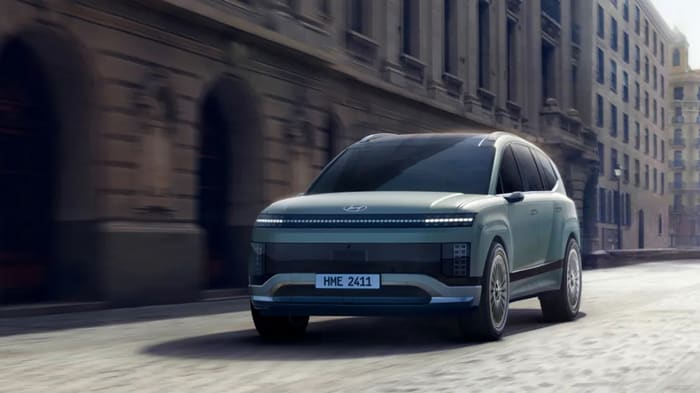
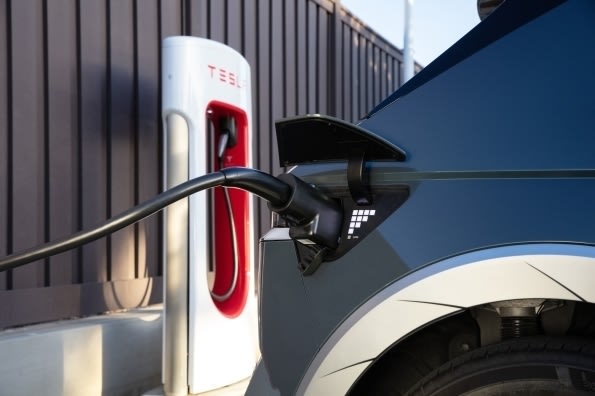
The Hyundai Motor Company has decided to use Tesla’s EV charging specification, referred to as NACS (North American Charging Standard), for their upcoming model, the IONIQ 9, set to launch in the U.S. This particular charging protocol is utilized by Tesla’s Supercharger system, renowned for delivering rapid recharge times.
Hyundai has fitted the 2026 IONIQ 9, set for production at Hyundai Motor Group Metaplant America (HMGMA), with an NACS charging port. Following suit from the inclusion of NACS in the 2025 IONIQ 5—which is likewise assembled at HMGMA—the new addition brings up the count of vehicles utilizing this specification to two models.
Over 60 percent of all fast-charging stations in the U.S. belong to Tesla’s Supercharger network, which provides widespread national coverage.
This approach is seen as Hyundai's attempt to enhance customer ease when charging their cars by leveraging the extensively used infrastructure in the U.S., thereby boosting the competitive edge of its electric vehicle lineup and driving up sales.
Moreover, it is viewed as a method to lower the expenses linked to building up the charging station infrastructure.
Earlier, Hyundai provided NACS adapters for their current electric vehicles manufactured with the CCS standard, enabling these cars to utilize Tesla Superchargers.
In the United States, Hyundai has offered complimentary NACS adapters for five models: the IONIQ 5, IONIQ 6, IONIQ 5 N, Kona Electric, and the IONIQ Electric hatchback.
A representative from the auto industry commented that having access to Tesla’s Supercharger network, which covers more of North America compared to CCS, undoubtedly provides a significant benefit.
Upcoming electric vehicles from Kia and Genesis manufactured at HMGMA are anticipated to embrace the Tesla Supercharger standard.